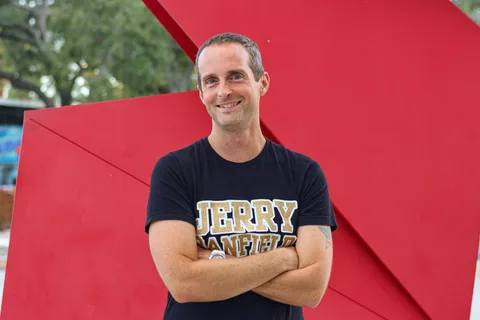
Jerry Banfield standing in front of a red sculpture

Life story and personal history help from me, Jerry Banfield

Turn Your Life Story Into Something Your Family Can Keep

I can help you turn your memories, family history, expertise, unfinished writing, photographs, and recorded voice into a book, audiobook, podcast, video series, blog, or private family archive.

We can work together in person around Tampa Bay, over Zoom, or through recordings you send me.

You do not need to be a writer. You do not need to understand the technology. At the beginning, all you need to do is talk.

Life story and media services — not estate, legal, tax, financial, medical, or end-of-life planning.
35 self-published books 22 audiobooks 10,000+ videos created Creating online since 2011 In person around Tampa Bay or remote

Why I help people record their life stories

In my living room in St. Petersburg there are two dressers my father built by hand about thirty years ago.

On the back of each one, in his handwriting, it says: “From Dad to Jerry, 1989, Yokota, Japan. Love, Dad.”

My father died in 2014. Those dressers represent thousands of hours of his work, and there is nothing I own that I care about more. They sit in my house and I see them every day.

But here is what I have realized in the twelve years since he passed: what I really wish I had is a book of his life story.

My dad was a stay-at-home father while my mom served as an officer in the Army. I spent tens of thousands of hours at home with him — dinners, snacks, long conversations where he told me his stories. His life was more entertaining and more surprising than mine. I know most of his story because I had all that time with him.

My children never met him. And no matter how well I retell his stories, my version will never add up to him telling them in his own words.

I have one video of him talking, from Christmas 2010. I remember thinking as I recorded it that I would watch it someday after he was gone. But a video like that captures one conversation at one moment. It cannot answer the questions I have now — what he was thinking during the hard years, what he learned, what he regretted, what certain moments meant to him. I did not know to ask those questions while he was alive.

A photograph can show what you looked like. It cannot explain what you were thinking.

So I decided to do for my own children what I wish my father had done for me.

In 2014, in early recovery, I sat down and wrote a searching, honest ten-thousand-word story of my life in one sitting. It changed everything. For the first time I could see my whole life as one story — the patterns, the turning points, what I had actually created. Since then I have published a full recovery memoir, and this year I published a one-hundred-thousand-word memoir covering my entire life from 1984 to 2026. I also write a daily autobiography — ten or twenty dictated minutes a day about what I did, what I was thinking, and what happened.

Why? I have a ten-year-old daughter and a seven-year-old son. I see them almost every day, and even so, they will never get to hear my full story unless I put it somewhere they can hold. They cannot read most of my books yet. But the books are ready. I imagine them decades from now, reading about their father as a kid, as a college student, as a young man figuring out his life — and understanding who I was, how I loved them, and what I lived through.

One more thing showed me how much this work matters. I once sat with an older friend who had talked about writing a book for years and never started. Then one day there was a microphone, a listener, and permission to simply talk — and the story started pouring out. Watching someone make meaning of their life out loud, knowing it was finally being captured, is some of the most meaningful work I have ever been part of.

Here is what I know: your family may know the outline of your life without knowing what it felt like to live it. People can spend years together without fully knowing one another. A personal book, a recorded voice, a set of interviews — these communicate thoughts, memories, and feelings that are difficult to fit into ordinary conversation.

Recording your life story is not an exercise in ego. It is an act of connection.

Your life does not need to be famous to be worth understanding.

If reading that put a specific person or story in your mind, texting me is an easy first step. But if you are the kind of person who, once decided, wants to get moving right away — skip the text and schedule your call. We will make the plan together in one private 30-minute conversation, with no subscription and no obligation to continue.

Schedule My $96 Life Story Project Call

Your life does not need to be famous

Almost everyone I talk with starts by saying some version of “my life isn’t that interesting.” Here is what I have found instead: every life contains patterns, lessons, love, and loss. You are simply used to your own story.

Meaningful personal-history material can be almost anything:

Not every project needs to be a comprehensive autobiography. A focused forty-page family book, a set of recorded interviews, or a private website with stories and photographs can be as meaningful as a full memoir. The first step is not writing a whole book. The first step is deciding what matters.

What we can create together

This kind of work is sometimes called personal history, memoir ghostwriting, oral history, or life-story production. Here are the forms your story can take. We can start with one and add others later — the same recorded conversations can feed several of these.

A private life-story or family-history book

A short life-story book, a full memoir or autobiography, a private family edition, or a public book. It can be chronological or organized by theme — a profession, a relationship, a period, a lesson — and illustrated with photographs, letters, maps, recipes, captions, and documents.

Help finishing the book you already started

Maybe you have a manuscript, chapters, notes, voice recordings, a journal, an outline, or an abandoned draft in a folder somewhere. I can help with structure, editorial direction, transcription, revision, formatting, cover direction, publishing setup, and — most importantly — completion. My own mother has a two-hundred-thousand-word life story sitting on her computer that she has not let me help her finish. I know exactly how common the almost-done book is, and I know how to get one over the line.

An audiobook or spoken life story

Your real voice — your cadence, your laughter, your expressions, the way you actually tell a story — is worth preserving on its own. We can create an edited spoken life story, an audiobook, chapter-by-chapter recordings, a private family audio collection, narrated letters, or an oral-history interview series.

A podcast

I can interview you, a family member can interview you, or you can record solo reflections. It can be a finite private series just for your family, a public podcast, thematic episodes, or a companion to a book.

Video interviews, a video memoir, or a YouTube channel

Conversational interview recordings, short thematic videos, long-form interviews, life chapters, family-only video, public YouTube, a private video library, or a mix of public and private material. I have created videos for fifteen years, and I will also tell you honestly what video does and does not do well — I cannot promise cinema production values or YouTube success, and I would rather say that plainly.

A life-story blog or personal-history website

Your story can become an organized written archive, a public blog, a private family website, a business-founder history, a searchable home for long-form material, or a multimedia family-history site with stories and photographs together.

A private, access-controlled family archive

For material that should stay in the family: access controls, portable master files, downloadable copies, documented account ownership, backups in more than one place, independent hosting options, a clear access plan for trusted family members, and less dependence on any single social-media platform — with ongoing costs and maintenance responsibilities written down before you choose.

No honest technology provider can promise that one website or platform will always be there. What I can do is help you build a more durable personal-history system using portable files, clear ownership, multiple copies, and documented access.

Publishing and promotion support

When you want a public project, I can help with book listings, publishing accounts, website copy, podcast setup, YouTube setup, launch content, interview content, advertising setup, or an ongoing publishing plan. Promotion is optional. I cannot guarantee sales, rankings, press, subscribers, views, or audience growth.

Videos get consumed. Books get absorbed. A book gives your story a beginning, a shape, and a form someone can hold, read, revisit, or pass down.

I say that as someone who has created more than ten thousand videos. I have also lost videos — to platform changes, deleted channels, dead hard drives, and formats that aged badly. That experience is exactly why I help people put their stories into forms they own and can keep.

Not sure which of these formats fits your story? You do not need to decide before we talk. Choosing the simplest useful starting point is exactly what the first call is for.

Schedule My $96 Life Story Project Call

You talk. I handle the agreed production.

The central promise of this work is simple: you talk, and I help turn what you have lived, learned, built, and loved into something other people can keep.

Depending on the scope you approve, the work I take off your plate can include planning questions, interviewing, recording, transcription, organizing a timeline, identifying themes, outlining, shaping chapters, editing, marking uncertain facts for your confirmation, redacting private names or details, selecting photographs, writing captions, designing or coordinating a cover, book formatting, audio cleanup, video preparation, website production, publishing setup, final-file organization, and handoff to you.

Here is how I built my own most recent memoir: I talked into voice memos, used AI transcription and my own editing to turn the talk into a manuscript, shaped the chapters, published the book, and then produced the audiobook. I have refined that workflow across 35 books and 22 audiobooks. When we work together, you get that entire system — and you mostly just talk.

You work with me directly. I do not take your most personal stories and pass them through a rotating agency team.

To be clear about what that does and does not mean: some steps still involve third-party services — printing, distribution, scheduling, payment, AI transcription, hosting, and publishing platforms. What stays constant is that I am the person listening, making the editorial decisions with you, and responsible for the work.

Real books made with this exact process

These are not mockups. Every book below is a real book I wrote and published about my own life — and each one started as talking, not typing.

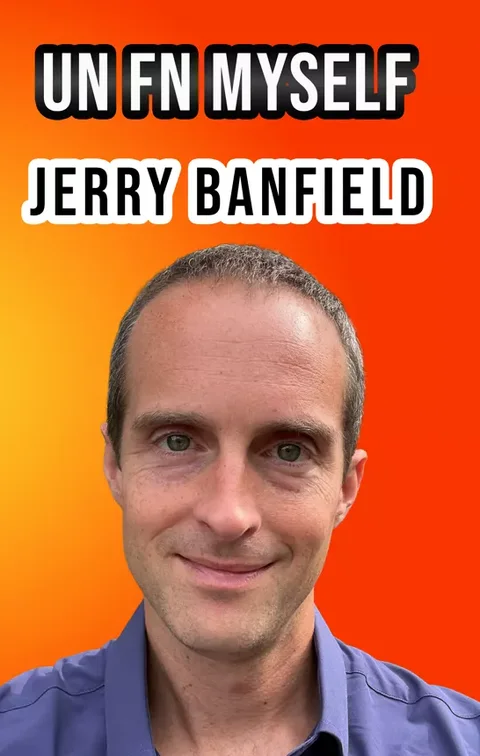
Front cover of Un Fn Myself by Jerry Banfield
Un Fn Myself — my complete life story, 1984 to 2026, about one hundred thousand words. I talked it into voice memos, edited the transcripts into a manuscript, and published the book and the audiobook.
Front cover of Author in St. Petersburg by Jerry Banfield
Author in St. Petersburg — my raw daily journal entries from the season I started over as an author, organized and published as a book.
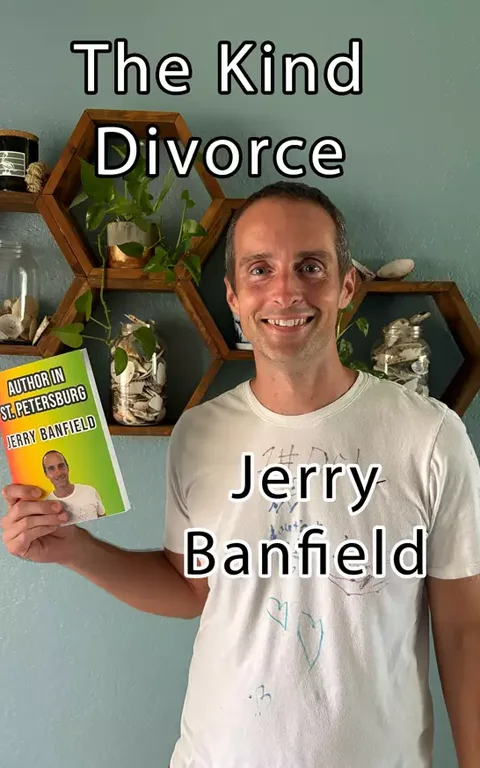
Front cover of The Kind Divorce by Jerry Banfield
The Kind Divorce — a day-by-day account written as it happened. Even a painful season can be recorded with honesty and love.
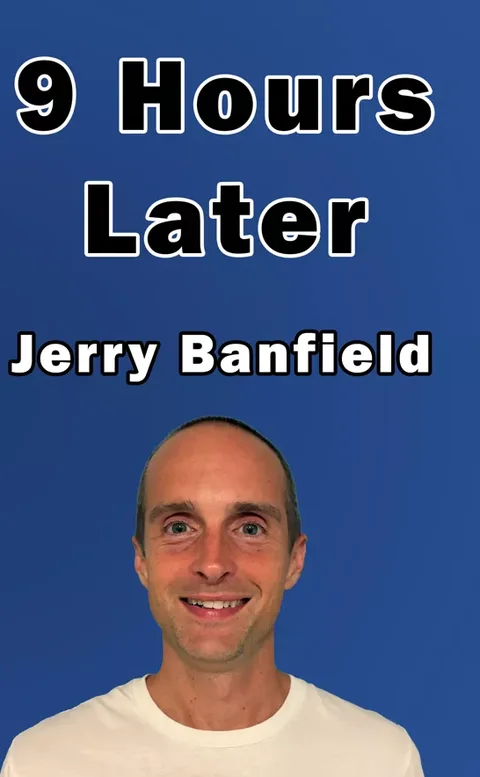
Front cover of 9 Hours Later by Jerry Banfield
9 Hours Later — the fifth book in my Daily Autobiography series, built from ten to twenty dictated minutes a day.

This is the same workflow I bring to your story. The only difference is whose voice is on the recordings.

Choose how much help you want

There is no giant production you must commit to. These are three ways of working, and we can move between them as your project evolves.

1. Planning and coaching

Best if you want to do most of the work yourself. Book calls as needed for story structure, interview questions, workflow design, manuscript feedback, AI setup, publishing guidance, privacy decisions, or simply accountability. If you are technical enough to do everything yourself, I hope this page inspires you to go do it — and one call can still save you weeks of figuring out the order of operations.

2. Collaborative production

You record or write the material; I help organize, edit, produce, and publish the parts you choose. Good for someone who enjoys the telling but not the technology.

3. Full concierge implementation

You primarily talk and review. I perform the specifically authorized production work at $192 per working hour. The transparent hourly model means we can begin with one small, focused piece — a single interview, one chapter, one photo archive — instead of you committing to a large fixed-price production before you know how it feels.

I would rather tell you honestly that a smaller project makes sense than sell you work you do not need. Some comprehensive projects genuinely take many working hours — I will not pretend otherwise, and you will always see the scope before you approve it.

And if you honestly do not know yet how much help you want, that is a normal place to start. Tell me where your story stands today, and I will tell you plainly which way of working fits.

Text me at 727-339-0333 with your name and “life story” to get started

What you can bring

People arrive at this work from very different starting points, and every one of these is a fine place to begin:

I do not need you to organize anything before the first conversation. One honest note: not every source can automatically be used — copyright, consent, privacy, quality, and relevance still need review — and I will flag anything that needs a closer look.

Public, private, or both — you decide

My own writing voice is radically honest. I publish books about my recovery, my divorce, and my mistakes. But that is my choice for my story. In your project, you control the level of honesty, privacy, naming, redaction, and publication.

Your project can be any of these, or a combination:

And these commitments hold in every case: you choose the intended audience; you review the agreed final material; nothing is publicly released without your approval; authorship and credit are agreed before publication. Whenever practical, books, domains, channels, publishing accounts, and hosting accounts are established in your name or handed over to you — you should keep control of your accounts, files, name, and story. What happens to raw recordings and final export files is addressed in the written project scope.

I will not promise absolute security — no honest person can. For particularly sensitive projects, we have a written conversation about tools, access, retention, and permissions before any files move.

Your story remains your story.

How I use AI without letting AI take over your life story

I use AI tools every day, and I want to be completely transparent about what that means in this work.

AI reduces the repetitive work: transcription, organizing hundreds of pages of talk, proposing alternate structures, cleanup, formatting, metadata, and technical implementation. That is why one person can now do what used to take a small production team, and it is a big part of why this work has become affordable.

What AI never gets to do is invent your life. No made-up memories, no invented dialogue, no fabricated accomplishments, no imagined family history. I listen. I make the editorial judgments, and I remain responsible for them. You confirm the facts and approve the agreed final version. Anything that cannot be verified gets marked for your confirmation, softened into clearly personal recollection, or removed.

I will tell you which major third-party tools will process your material, and I will not claim your material is excluded from a vendor’s data practices unless that setting has actually been verified. For highly sensitive material, we agree on the privacy workflow before any files are transferred.

AI is the assistant. You are the source, and I am the person responsible for the work.

Why work with me

I live this. I have written my own life story more than once — a ten-thousand-word inventory that started my recovery, a full recovery memoir, and this year a one-hundred-thousand-word memoir covering 1984 to 2026 — plus a daily autobiography I dictate every day. I am not offering you something I have never done myself.

I finish. Almost everyone has book ideas. Most people never start; of the people who start, most never finish. I have finished 35 self-published books and 22 audiobooks, and the single most valuable thing I may do for you is carry your project through the middle, where almost every life story quietly dies in a drawer.

I have been creating online since 2011 and working online full-time since 2012 — more than ten thousand videos, more than twenty YouTube channels, billions of views across platforms, plus years of livestreaming, podcasting, websites, publishing, advertising, and AI workflows. I do not list that to impress you. It supports one point: I know how to capture spoken ideas, turn them into finished media, publish across formats, and hand over organized files a family can keep.

Many people who help with personal histories specialize in one output. A writer creates the manuscript. A videographer creates the film. A web designer creates the site. My unusual strength is that I understand how the pieces fit together. We can begin with one conversation and decide whether your story belongs in a book, audio, video, a website, or a combination — and the same recorded conversations can feed all of them.

And because I have watched my own platforms, accounts, and videos disappear over fifteen years, I design for keeping: portable files, clear ownership, multiple formats, backups, and documented access. A social-media account by itself is not a personal-history plan.

Finally: I will be honest with you when a simpler project is the better choice. A forty-page book your family actually reads beats a thousand-page project that never gets finished.

In person around Tampa Bay, or remotely from anywhere

I live in St. Petersburg, Florida, and when it is practical I prefer to do life-story and personal-history work in person. There is something different about sitting in the same room with someone while they remember. I am available to work in person throughout St. Petersburg, Tampa, Clearwater, Sarasota, and nearby Tampa Bay and Gulf Coast communities, at a mutually agreed location.

Distance does not need to stop a project. I work remotely by Zoom with people anywhere file exchange is practical, and some of my favorite material arrives asynchronously — voice memos recorded on a phone at the kitchen table often carry more life than a formal session.

If in-person work would involve travel time or travel expenses, we discuss that before you authorize anything.

If you are near St. Petersburg or anywhere around Tampa Bay and like the idea of telling your story in person — or you are far away and wondering whether remote works for your situation — start with one message and mention where you are.

Text me at 727-339-0333 with your name and “life story” to get started

How the first call works

1

Schedule the call

Schedule your $96 Life Story Project Call. It is a private 30-minute one-on-one conversation with me on Zoom.

2

Answer a few short questions

Whose story are we discussing? Who should eventually receive it? What format are you imagining? What material exists? What should stay private? What has kept the project from moving?

3

Meet with me directly

I listen, ask questions, help identify the simplest useful first project, and outline possible next steps for your specific situation.

4

Leave with direction

Do the project yourself with the plan we made, book another session as needed, ask me to implement a defined task, or request a larger written scope.

The call does not obligate you to hire me for a larger project. The plan is yours either way.

Clear pricing

Life Story Project Call

$96 USD

A focused 30-minute planning conversation

  • One-on-one with me, Jerry Banfield
  • Remote by Zoom unless the appointment says otherwise
  • Planning and practical direction you keep, whatever you decide next
  • No subscription and no obligation to continue
  • Rescheduling available with at least 24 hours’ notice
  • Honest conversation — no guaranteed outcomes
Schedule My $96 Life Story Project Call

Implementation after the call

Any writing, editing, production, publishing, website, audio, video, family-archive, or other implementation work we agree on is billed at $192 per working hour unless I give you a different written quote.

  • No implementation begins without your approval.
  • A larger project receives a written description of the scope.
  • Material third-party expenses — travel, printing, platforms, advertising, hosting, domains, equipment, distribution — are discussed before they are incurred.
  • Scope, timing, and total cost vary by project.
  • No sales, audience, publication-approval, platform-longevity, or financial outcomes are guaranteed.

I will tell you what I expect to work on and identify known outside costs before you authorize the next step.

Examples of how a project might start

Every project gets its own written scope before you approve anything, so treat these as illustrations of shape and scale — not quotes. At $192 per working hour, three common starting points look like this:

If the open-ended feeling is what stops you, we can put a cap in writing: for example, authorize two working hours ($384), see exactly what I complete, and decide then whether to continue. You stay in control of the budget at every step.

A meaningful gift for a parent, grandparent, partner, or founder

Some of the people reading this page are not the storyteller. You are the daughter, the son, the grandchild, the spouse, or the business partner who knows the stories matter and wants to help them get recorded.

A life-story project makes a genuinely meaningful gift around a milestone birthday, an anniversary, a retirement, a family reunion, a business transition, the completion of a major career, the arrival of a grandchild, a holiday gathering — or simply because your family decided the stories matter.

One requirement from me: the storyteller has to want to do this. I need their informed participation and consent — this works because someone finally gets a listener, not because someone got signed up for an obligation. A lovely way to start is to give the first call, let them talk with me once, and let them decide how far to go.

If you are giving the first call as a gift, schedule it now and mention the gift in the scheduling notes — we will arrange the details together from there.

Schedule My $96 Life Story Project Call

This may not be the right fit if…

None of these make you unwelcome as a person — they just mean this particular service is not what you need, and I would rather say so here than after you have paid me.

Questions and answers

Do I need to be a writer?

No. You need to be willing to talk. I handle structure, editing, and production, and my workflow is built specifically to turn natural spoken conversation into finished writing that still sounds like you.

What happens on the $96 Life Story Project Call?

We spend a focused 30 minutes one-on-one. I listen to what you want to record, who it is for, what should stay private, and what material already exists. Then I help you identify the simplest useful first project and outline possible next steps. You leave with a practical direction whether or not we ever work together again.

Is the first call only for people ready to hire you for a large project?

No. The call is designed to be independently valuable. Many people take the plan we make and do the work themselves, and I think that is a great outcome. It is a planning conversation, not an application or a disguised sales call.

Can you work with someone who is uncomfortable with technology?

Yes. You do not need to understand publishing, recording, websites, or AI. If you can have a conversation — in person, by phone-style Zoom call, or into a simple recorder — I can handle everything technical.

Can we work in person?

Yes. When practical I prefer in-person work around St. Petersburg, Tampa, Clearwater, Sarasota, and nearby Tampa Bay communities, at a mutually agreed location. Any travel time or expenses are discussed before you authorize them. The first call itself is normally on Zoom.

Can we work remotely?

Yes. I work by Zoom and file exchange with people anywhere that is practical.

Can I send voice memos instead of meeting live?

Yes. Asynchronous work is often wonderful — you can record voice memos on your phone whenever a memory surfaces and send them to me along with photographs, notes, or documents. I organize what arrives.

Can family members participate in the interviews?

Yes. A family member can sit in, ask questions, or even be the interviewer — sometimes a grandchild asking the questions creates the best recording of all. The storyteller always participates willingly.

Can you help finish a book I already started?

Yes. Manuscripts, chapters, notes, journals, outlines, and abandoned drafts are one of my favorite starting points. We assess what exists, decide what the finished form should be, and build a completion path.

Can the finished project remain private?

Yes. A project can be entirely private: printed books that exist only in family hands, private audio or video, an access-controlled family website, or source files delivered only to you with nothing published at all.

Can some parts be public and other parts private?

Yes. We can create a public version and a fuller private version, anonymize or redact specific names and details, or reserve certain material until a future date you choose.

Who owns the book, recordings, website, and final files?

You do, whenever practical. Books, domains, channels, publishing accounts, and hosting accounts are established in your name or handed over to you, and the written project scope records ownership, credit, and what happens to raw recordings and final export files.

How do you use AI?

AI assists with transcription, organization, editing assistance, formatting, and technical work — the repetitive parts. I listen, make the editorial decisions, and remain responsible for the result, and I will tell you which major tools will process your material.

Will AI make up parts of my story?

No. AI is never used to invent memories, facts, dialogue, accomplishments, quotations, or family history. Anything that cannot be verified is marked for your confirmation, presented clearly as personal recollection, or removed. You confirm the facts and approve the agreed final version.

Can you publish the book under my own accounts?

Yes, and I prefer it. Publishing under your own accounts means you keep control of your book, your files, and your name.

Can you help with photographs and documents?

Yes. We can select, scan, caption, and place photographs, letters, recipes, maps, and documents in a book, website, or archive. Copyright, consent, and quality still need review, and I will flag anything that does.

How long does a project take?

It depends on the scope. A focused set of recorded conversations can provide enough material for a meaningful book, but the total time depends on length, complexity, source material, editing, and your review. I will give you my honest estimate for your specific project rather than a universal promise.

How much will a full project cost?

The planning call is $96. Implementation you approve is billed at $192 per working hour unless I give you a different written quote, so the total depends on scope. The hourly model means we can start with one small piece, see how it feels, and grow from there — you will always see the expected scope before you approve it.

Can you guarantee book sales, views, or publicity?

No. Nobody can honestly guarantee those outcomes, and I will not pretend to. Promotion help is available, but sales, rankings, press, subscribers, views, and audience growth are never guaranteed.

Can you guarantee that a website or family archive will always stay available?

No, and you should be suspicious of anyone who says yes. What I can do is design for durability: portable and exportable files, copies in more than one place, documented account ownership, independent hosting options, and a written explanation of ongoing costs and maintenance responsibilities before you choose.

Is this estate planning?

No. When I talk about your life story or personal history, I mean helping you preserve your memories, voice, experience, photographs, and ideas through books and media. I am not providing estate, legal, tax, financial, medical, therapeutic, funeral, or end-of-life services, and nothing here replaces the professionals who do.

Is this legal or financial advice?

No. I am not a lawyer, accountant, or financial adviser, and nothing in this work is legal, tax, investment, or financial advice.

Is this therapy?

No. Telling your story can feel meaningful, and people often find the process clarifying, but I am not a therapist and this is not mental-health treatment, diagnosis, or crisis support. If you need that care, please work with a licensed professional — this project can happen alongside it.

What if my story includes painful, controversial, or private material?

You set the level of honesty. My own books are radically honest because that is my choice; in your project you control what is included, what is softened, who is named, what is redacted, and what is published. We go at your pace, and for especially sensitive material we agree on tools, access, retention, and permissions in writing first.

Can you help promote the finished work?

Yes, optionally. I have years of experience with publishing, YouTube, podcasting, and advertising setup, and I can help with launch and promotion if you want a public project — with no guaranteed results.

Can I purchase the planning call as a gift?

Yes. Milestone birthdays, anniversaries, retirements, and reunions are common occasions. The storyteller needs to participate willingly — mention the gift in the scheduling notes and we will arrange the details together.

What is personal history?

Personal history means recording, organizing, writing, editing, producing, publishing, or privately storing someone’s stories, memories, values, expertise, family history, photographs, documents, audio, video, and perspective. This kind of work is sometimes called personal history, memoir ghostwriting, oral history, or life-story production.

What is an oral-history interview?

A recorded, guided conversation in which someone tells their story in their own voice, usually led by prepared questions and follow-ups. The recordings can stand alone as a family audio collection or become the raw material for a book, podcast, video, or website.

Does my life need to be unusual enough for a book?

No. Every life contains patterns, lessons, love, and loss, and you are simply used to your own story. Some of the material I most treasure from my own family is completely ordinary — dinners, sayings, the way someone told a joke. Ordinary is exactly what gets lost when nobody records it.

Can we begin with one small story rather than my entire life?

Yes, and that is often the best way to start. One story, one era, one relationship, or one recorded conversation is a complete project on its own — and if it feels good, it can grow.
A last note from me

I know what it feels like to wish a loved one had left more of their story. I have my father’s dressers, a handful of photographs, and one video from Christmas 2010 — and I would give a great deal for one book in his own words. He had the time to write it. He just never knew anyone was waiting to ask.

That is why I record my own story for my daughter and my son, a little every day. And it is why I sit down with other people and listen to theirs.

You do not need to decide the entire project today. You do not need a title, an outline, or a box containing every photograph you have ever taken. One conversation is enough to begin. The first step is not writing a whole book — it is deciding what matters and speaking honestly about it.

Bring the story as it exists today. Bring the unfinished manuscript. Bring the voice memos. Bring the question you keep putting off. We will begin there.

Talk directly with me and leave with a practical plan for recording and sharing what matters.